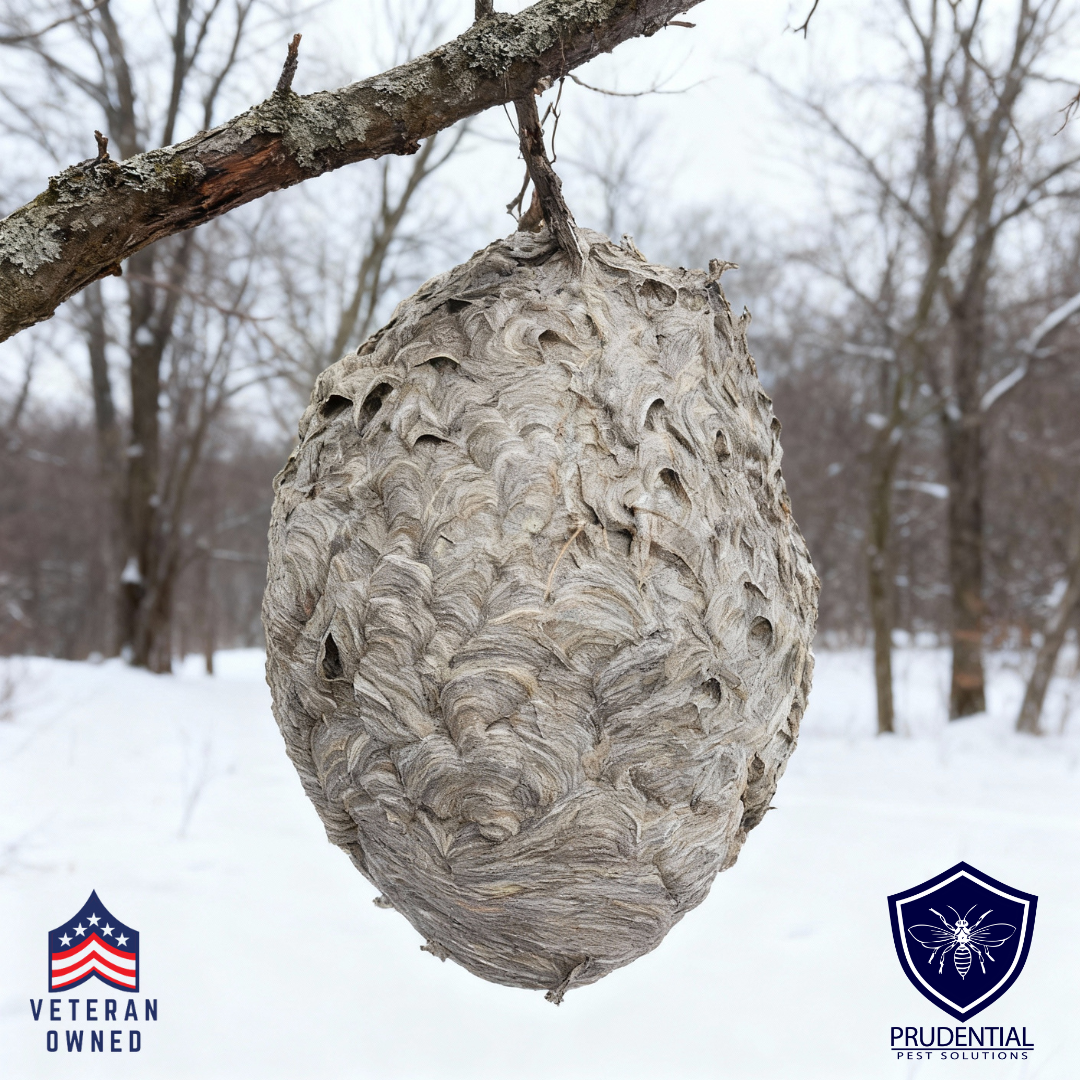
Can you safely remove a hornet’s nest in winter?
As winter settles in across Pennsylvania, with its chilly temperatures and bare trees, many homeowners spot something unexpected hanging from a branch: a large, papery hornet’s nest.
If you’re dealing with hornet control in Pennsylvania, you might wonder if now is the time to take action. At Prudential Pest Solutions, we often get questions about whether it’s safe or even necessary to remove a hornet’s nest during the colder months.
In this blog post, we’ll break down the facts, safety tips, and when to call in the pros for effective hornet control in Pennsylvania.
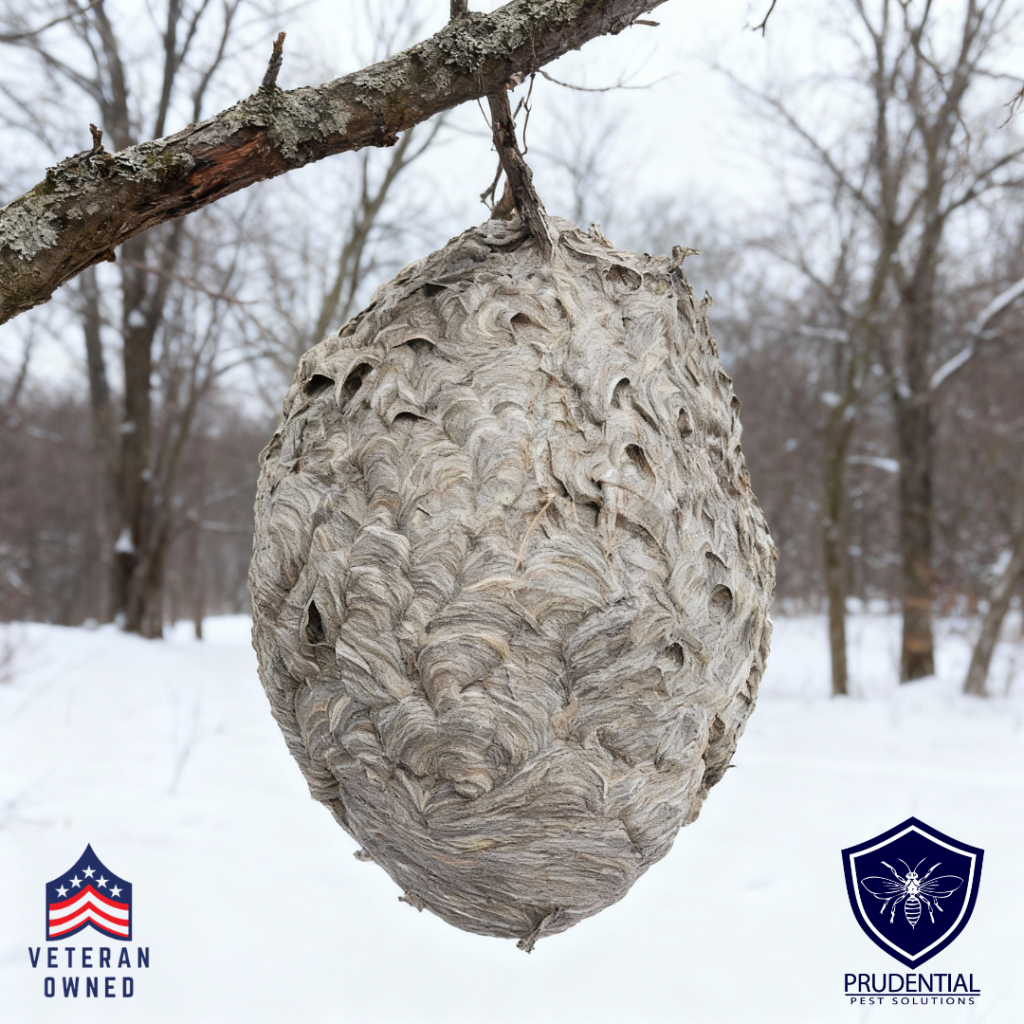
Hornets, such as the common bald-faced hornets found throughout Pennsylvania, have a life cycle that’s heavily influenced by the seasons. These stinging insects build their impressive nests in trees, shrubs, or even on buildings during the warmer months.
However, as fall turns to winter, the colony dynamics change dramatically. In late fall or early winter, the worker hornets and males die off due to the cold temperatures. Only the fertilized queen hornets survive, leaving the nest to hibernate elsewhere—often in protected spots like attics, under bark, or in the ground.
This means that by mid-winter in Pennsylvania, most hornet nests are completely empty and inactive.
They won’t be reused come spring, as new queens typically start fresh nests in different locations.
For residents in areas like Philadelphia or the rural parts of Pennsylvania, this seasonal die-off is good news for hornet control. Without active hornets defending the nest, removal becomes much safer and less risky.
Is It Safe to Remove a Hornet’s Nest in Winter?
Yes, winter is often the ideal time for hornet nest removal in Pennsylvania. Here’s why:
- Reduced Risk of Stings: With the hornets gone, you won’t face aggressive swarms. This is a huge advantage over summer removals, where hornets can sting multiple times and pose serious threats, especially to those with allergies.
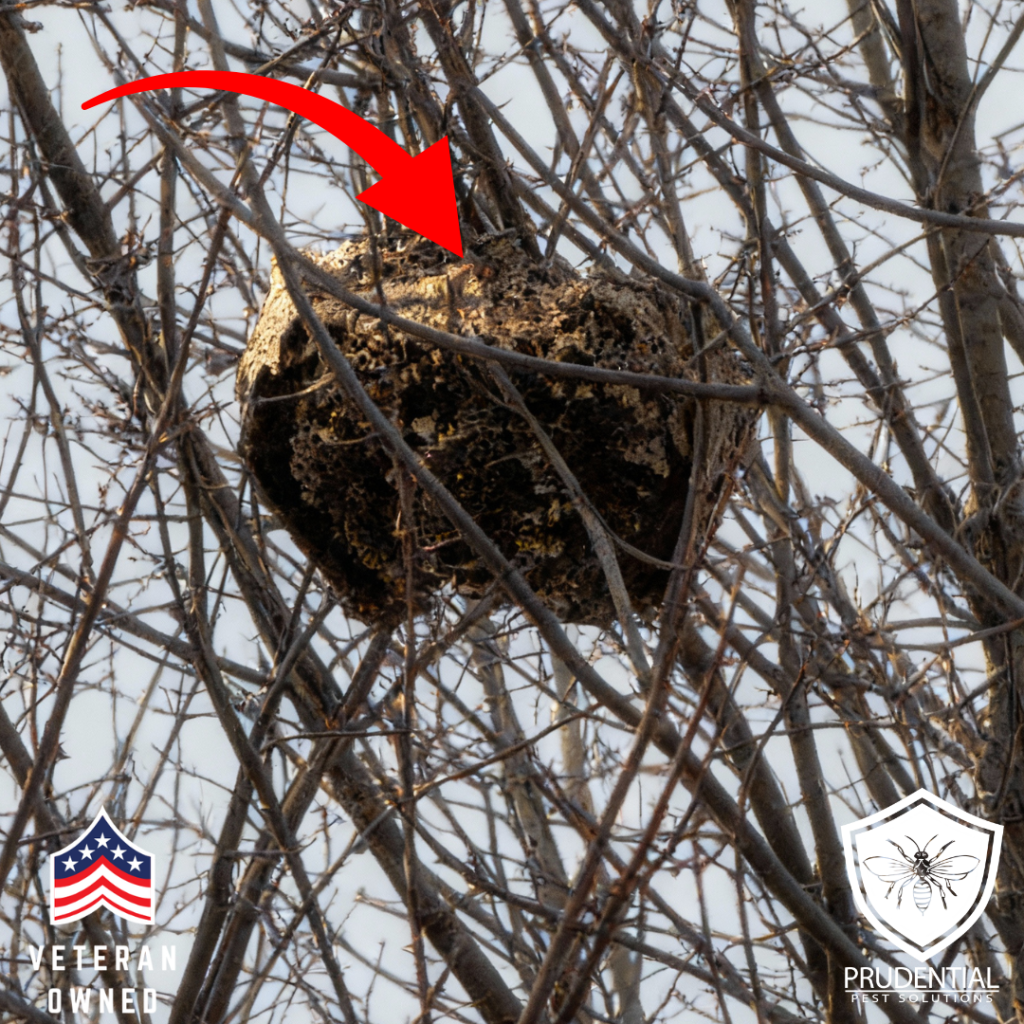
- Better Visibility: Leafless trees make it easier to spot and access nests high up in branches. In Pennsylvania’s winter landscape, you can clearly see the gray, football-shaped structures without foliage getting in the way.
- Prevent Future Issues: While the old nest isn’t reused, removing it can deter other pests or prevent structural damage if it’s near your home. Plus, it gives you peace of mind heading into spring.
However, safety should always come first. Even in winter, use caution—wear protective clothing, use a long pole or ladder securely, and avoid climbing if the tree is icy. If the nest is very high or in a precarious spot, it’s best not to DIY.
Call or text us at (484) 401-4361 to schedule an appointment!
email us at info@prudentialpest.com
Comments are closed